
"Not 'to be, or not to be' — tonight's question is to shake, or not to shake. It's the only way to keep your late grandfather's bar alive."
Hey everyone!
This devlog is about customers: how long they wait, what happens after you serve them, and the story customers who keep coming back. As promised last time, we're on the other side of the counter now. There's also a short list of things we added this week at the end.
How long do customers wait?
Every customer has a certain amount of patience. Keep them waiting too long and they give up on the order and leave. Patience starts once the customer sits down at the counter, which is also when their order shows up on the register screen. The time it takes them to get from the door to the counter doesn't count.
We didn't want everyone to have the same patience. It didn't make sense to us that someone ordering a beer and someone ordering a long, tricky cocktail would wait the same amount of time, so it depends on the drink. Harder drinks get more patience.
We also caught a bug in our playtests: patience kept running while the customer was talking to you. The conversation on the very first order of day one was eating up most of that customer's patience, so players were basically being punished for reading the dialogue. That's fixed now. Patience stops while someone is talking, and your hands are free during conversations, so you can keep making drinks.
The end-of-day receipt also counts the customers who left without their drink.
Serving
You hand the glass to the customer by dragging it over. Don't rush it, though. If you move the glass too sharply, the drink sloshes and spills onto the counter.
We also made one thing clear: the customer only scores what's in the glass. Whatever is left in the shaker, or anything you do with the shaker after pouring, doesn't count.
After you serve, you see the customer's reaction, money goes into the register, and if the drink was good you might get a tip. Right now the reaction pops up above the customer's head. Later on we'll move it to the register screen, like we did with the orders. What's new is that you can now see what went wrong. Mistakes that lowered your score are listed under the money you earned, biggest first. For example "too much gin", "no tonic", "shake too short", "glass underfilled" or "dirty counter". In Devlog #0 we said you could read the result on the customer's face. Now they also spell it out for you.
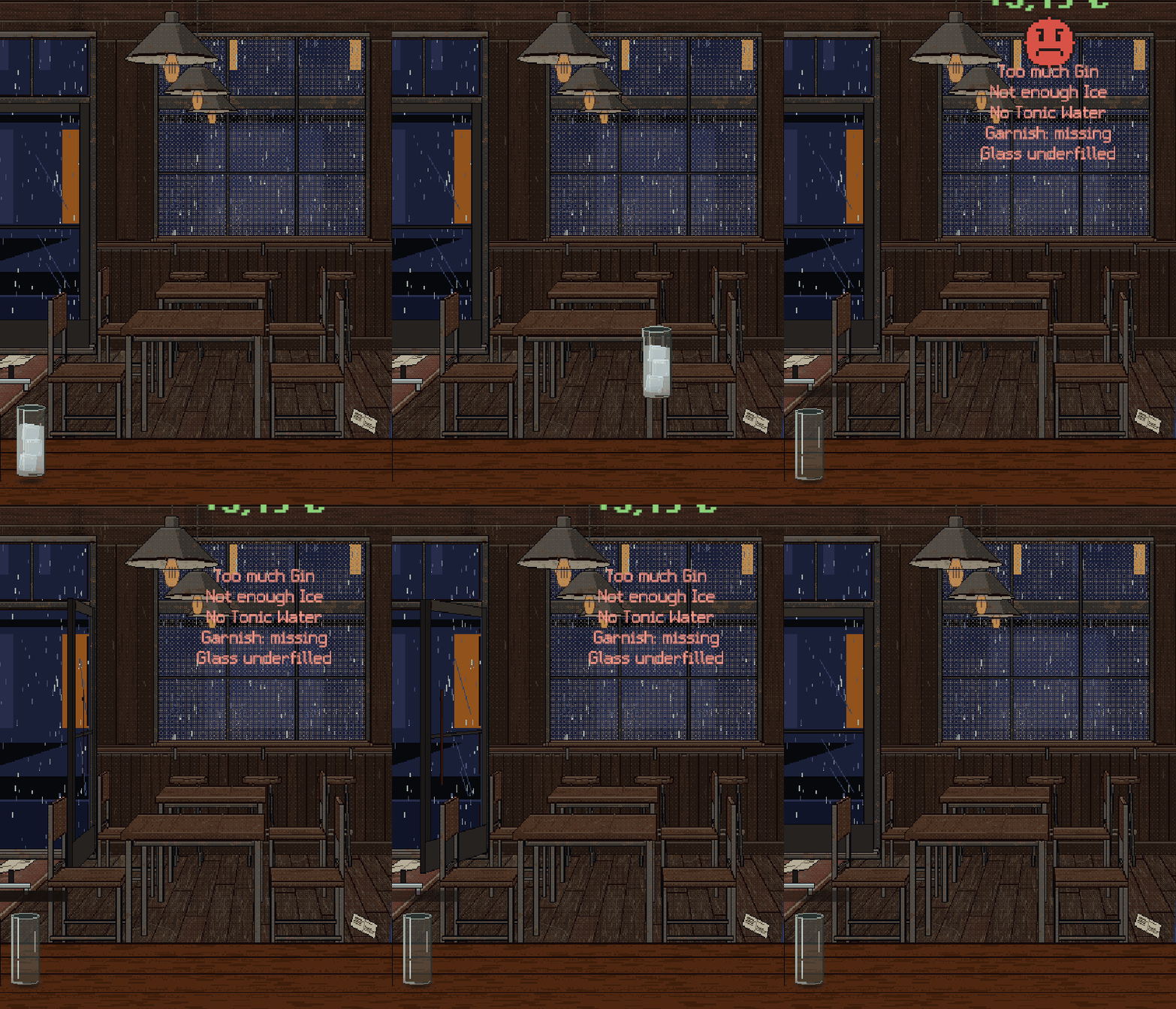
After getting their drink, the customer moves to an empty table and their spot at the counter opens up for the next person. If there's no free table, they just leave.
Story customers
Most customers order, drink and leave. Some of them keep coming back, though, and we call them story customers. Each one has their own name and personality. They show up at a set point in the day and talk to you both when they arrive and after they get their drink. The story doesn't speed up or stop based on how well you serve, but how well you make their drink can affect how that scene goes. When one of them starts talking, the rest of the bar goes dark and the light stays on the person speaking.
This week we wanted to introduce two of them by name.
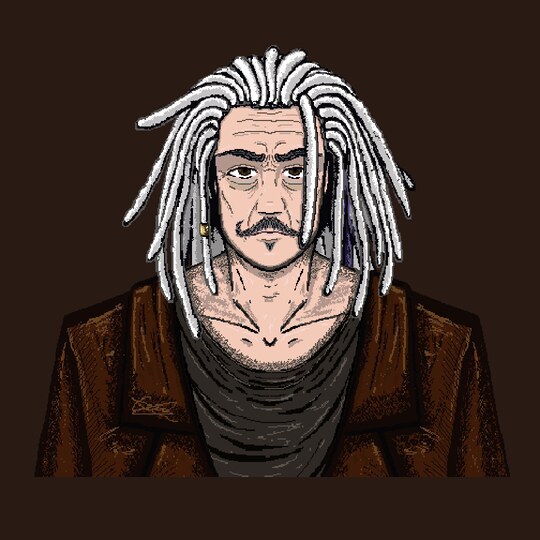
Master Ege is a seasoned bartender who's been working behind a bar on the same street for years. He drops by unannounced, takes a look at the counter and the shelves, and sometimes leaves without saying anything. He's not easy to please. We drew two expressions for him, a normal one and an angry one. Hopefully you won't see the angry one too often.
Erdem is a quiet regular who comes in every Friday and orders a gin and tonic. He doesn't talk much, and when he does, he keeps it short.
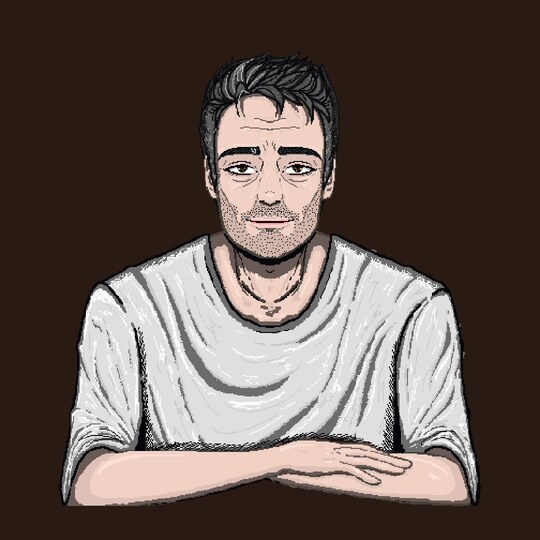
By the way, most of the characters are based on people on our team. They look like them and react to things the way they do. The rest of the story is pure fiction, of course.
We'd rather not say more about the story for now. We'll introduce the other characters in future devlogs.
Added this week
The jigger is in. It's a two-sided measuring cup, small on one side and large on the other, and you flip it with the mouse wheel. The game also measures what you pour without rounding now, so it's harder to get away with eyeballing difficult recipes.
Ice now shows up as individual cubes in the glass and floats as the liquid rises. A muddled lemon shrinks and sinks to the bottom, and its juice mixes into the drink. We also made liquids semi-transparent, so you can see the bar spoon or the muddler inside the glass.
The shaker now turns in the direction you shake it. It stays upright when you shake up and down, and lies on its side when you shake left and right.
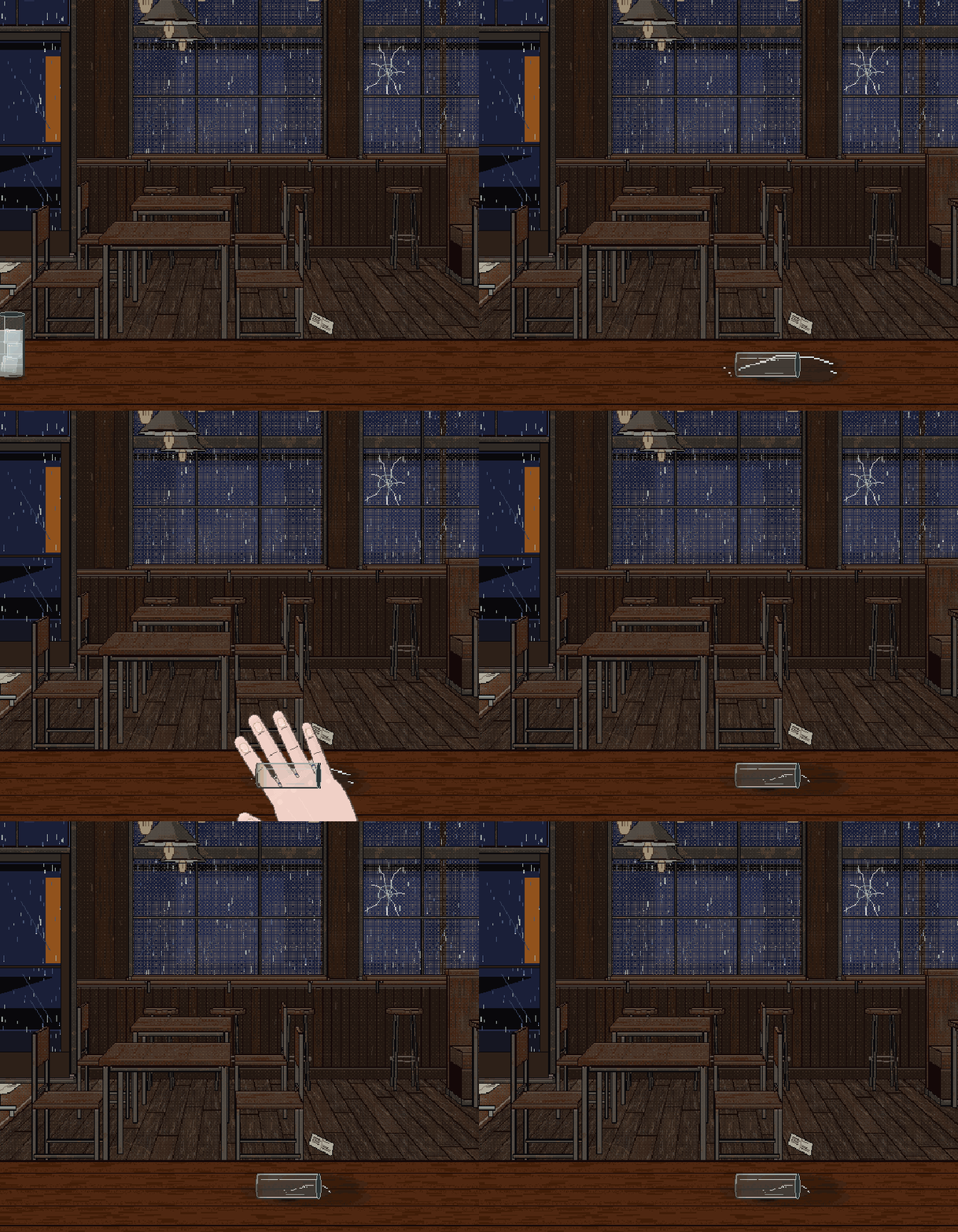
You can drop the serving glass now. Let go of it and it spins in the air, then either lands upright or tips over. A tipped glass slowly spills onto the counter, and clicking it stands it back up. If you try to pour into a tipped glass, it all goes on the counter.
Stains now stay where they land. If you pour while moving the bottle along the counter, it leaves a trail. The rag picks up the liquid, and the wet mark left behind dries on its own after a few seconds. Only the liquid counts as dirty.
What's next
In the next devlog we'll look at the bar itself, the room your grandfather left you.
So what kind of customer are you at a bar? The one who orders and waits quietly, or the one who tells the bartender about their whole day? Let us know in the comments or on Discord, we read everything.
Wishlisting To Shake, or Not to Shake on Steam is the best way to support us. Follow the game on Steam and new devlogs will come straight to you. Want to chat? Come find us on Discord.
See you behind the counter,
Team Sheer Cat